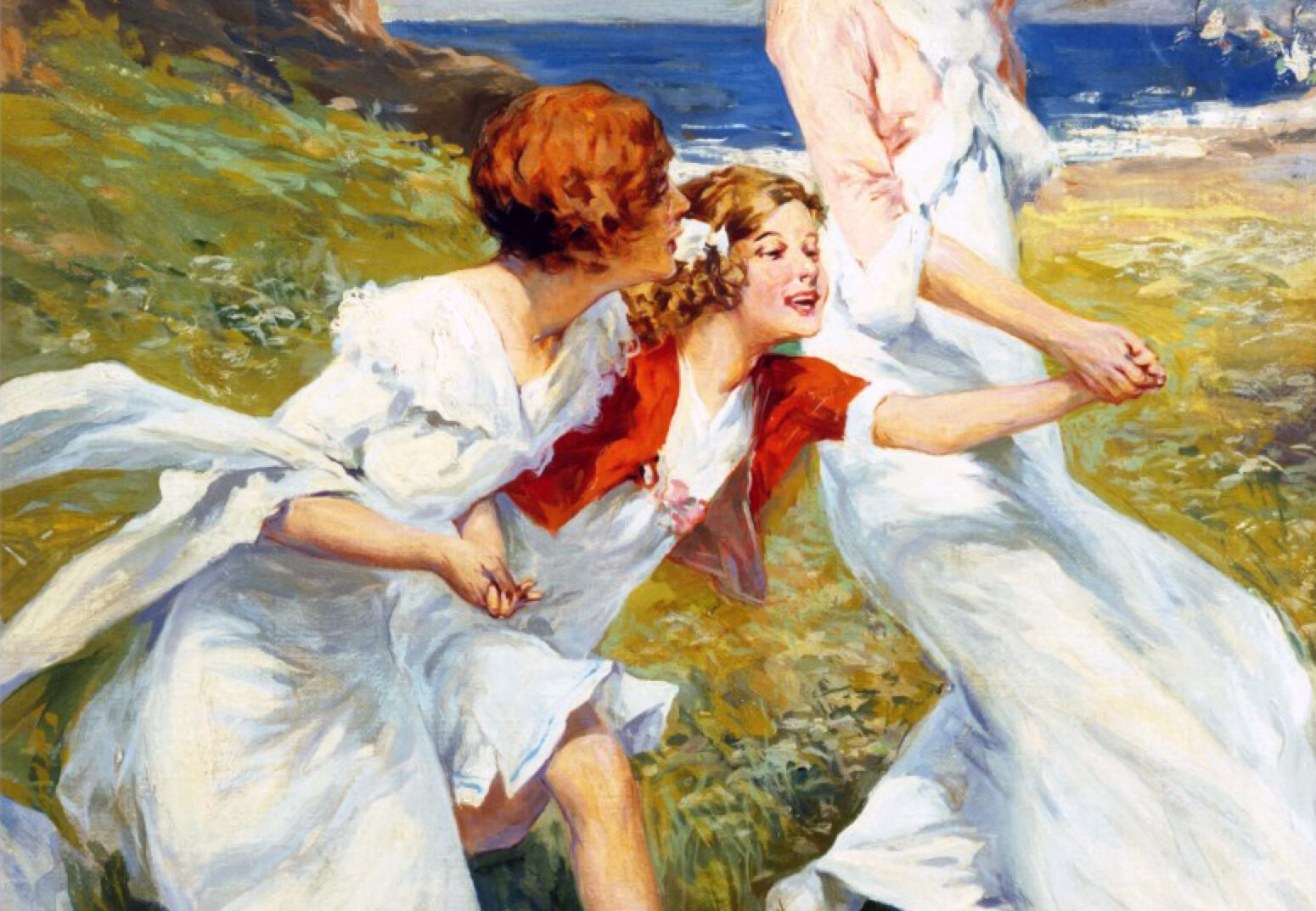
With the rise of 18th and 19th century writers such as Jane Austen, Ann Radcliffe, Mary Wollstonecraft, and the Brontë Sisters, readers saw an increase in women seeking autonomy through the natural world, and finding comfort in it. Elizabeth Bennet, one of Austen’s most notable heroines, takes frequent walks in the spacious English countryside and finds such liberation in it—a breath of fresh air that takes her away from the constraints of ballrooms, dining tables, and carriages.
Elizabeth’s lively, independent, and opinionated nature, along with her contrarian outlook towards society, is established at the outset of the novel. Her daily, solitary walks in nature seem to provide her with an escape from societal pressures, one being the space and autonomy that walking provides. “I do not wish to avoid the walk. The distance is nothing when one has a motive”, she says at one point. Walking alone is an independent act, a choice we make for ourselves, an action that has purpose and direction. Drowning amidst social obligations concerning marriage and childrearing, it is no surprise that Elizabeth clings onto this individualistic space that allows her full range of her thoughts and imaginative faculties.
Here, she gains a sense of not only freedom, but free will. While we define freedom as the absence of external limits on an individual’s choices, free will is the fundamental ability to make decisions based on one’s own desires alone. This free will influences Elizabeth’s rebellious tendencies early on in the novel when she treks three miles amidst a storm to visit her ill sister, Jane. Rather than wait to take a carriage, she finds a certain exhilaration in contending with the harshness of nature and succeeding.
It is no coincidence that the only character who loves walking is also the only one who possesses a love of reading and discourse, as well as a fierce desire to learn more about the world around her. This implies a deeper connection between nature and intellectual curiosity. William Wordsworth, a contemporary of Austen, speaks of nature as an eye-opening source of creative power: “I retained my first creative sensibility, that by the regular action of the world my soul was unsubdued.” Characteristics of Romanticism surface in these texts, positing imagination, emotionality, and individuality as crucial faculties in measuring how humans respond to nature.
It is almost as if nature itself is Elizabeth’s lover. “What are men to rocks and mountains?,” she passionately exclaims. She later finds such characteristics of nature in Darcy—in his lush and spacious grounds, his vast library, his willingness to intellectually challenge her and teach her more about the world. It is no surprise that the intimate moments between her and Darcy only occur outside where they can speak with passion and authenticity; Darcy’s final love confession on the verdant grounds of Pemberley is one such instance. This scenic setting emphasizes the genuine nature of their passion, and contrasts with the rigid and structured nature of ballroom dancing, courting, and arranged marriages.
It is generally understood that the more humans reconnect with nature, the more clarity we find within ourselves. Away from the rigidity of society, we are able to quiet our minds, explore buried thoughts and emotions, and feel a profound sense of respite. Austen is one such author who, through the spiritedness of her female characters, spearheaded the Romantic literary movement that saw nature as a source of renewal.